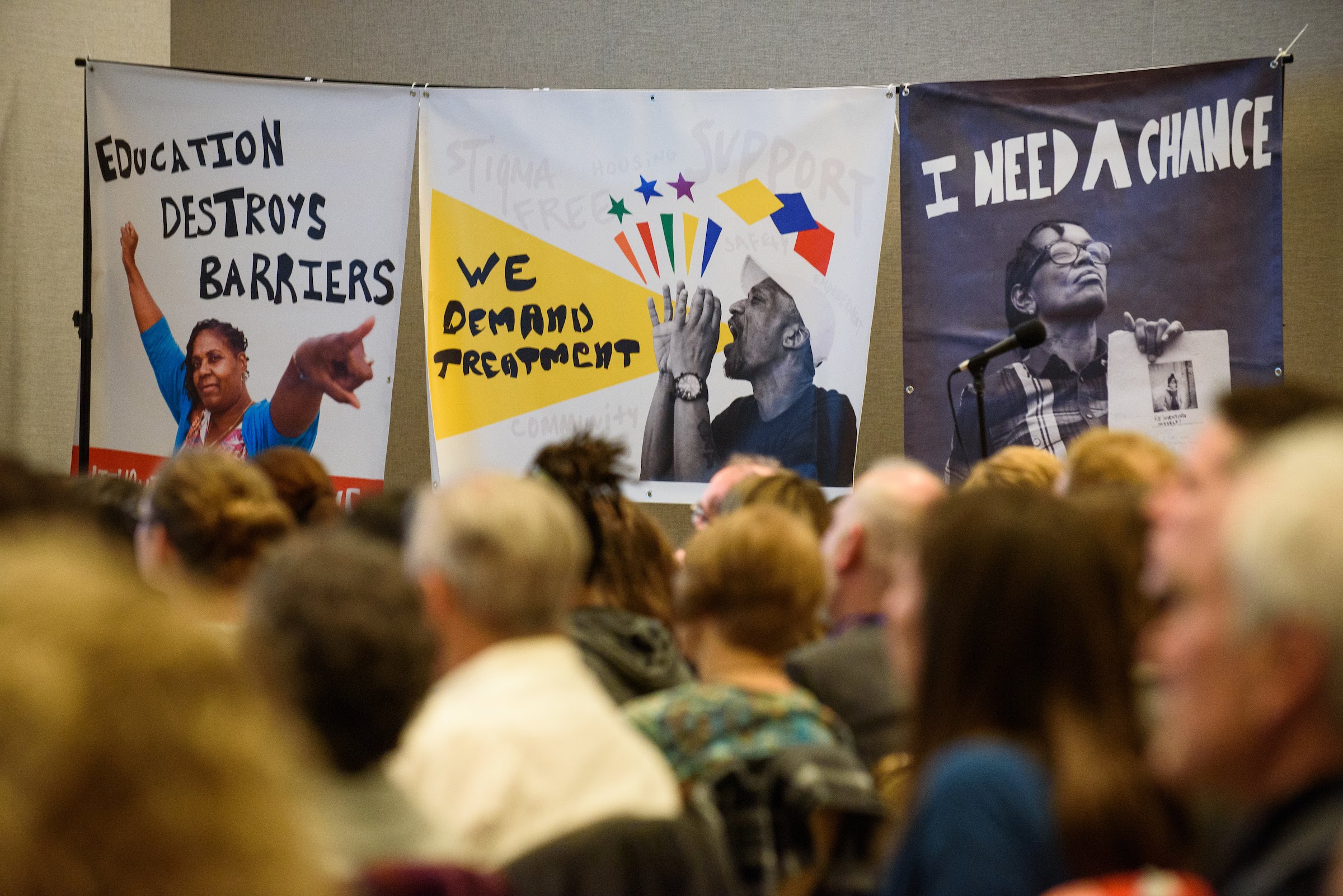
Artwork stating 'Education Destroys Barriers', 'We Demand Treatment', and 'I Need A Chance'

Search Results

You searched for: -

There are 17340 results  for your search.  View and Refine Your Search Terms

  • A Light in India

    Access to electricity in India takes a huge economic, educational, and health-related toll. A small company called Husk Power Systems has created an innovative system that is turning rice husks into electricity and illuminating India’s poorest state.

    Read More

  • Helping the World's Poorest, for a Change

    This is a column on an important new development program in use in at least 40 developing countries: give the poor cash payments, contingent on their use of health clinics and their children’s school attendance, to help break the cycle of poverty.

    Read More

  • To Beat Back Poverty, Pay the Poor

    Two columns on the most important new development program today, in use in at least 40 poor countries: give the poor cash payments, contingent on their use of health clinics and their children’s school attendance. These programs, which started in Mexico and Brazil, help the poor now and try to create a generation with less poverty in the future.

    Read More

  • Pickups Mobilize Bolivia's Maternal Healthcare

    Mobile health units are rolling clinicians into remote parts of Bolivia and helping to lower one of the world's worst rates of maternal mortality. Reporting costs for this story were partially funded by International Planned Parenthood.

    Read More

  • The Street-Level Solution

    Many of the errors in our homelessness policies have stemmed from the conception that the homeless are a homogeneous group. It’s only in the past 15 years that organizations like Common Ground, and others, have taken a more granular, street-level view of the problem — disaggregating the “episodically homeless” from the “chronically homeless” in order to understand their needs at an individual level.

    Read More

  • A Plan to Make Homelessness History

    By partnering with cities across America, the 100,000 Homes campaign is going directly to the streets to end homelessness - and it’s working. With roughly 700,000 people in the United States experiencing homelessness, this organization seeks to address that using a tiered system that considers individual health needs as well.

    Read More

  • Why Victims Face the Criminals Who Hurt Them

    The Victim-Offender Mediation/Dialogue program in Texas connects victims with those who harmed them to initiate a healing process founded on the premise of restorative justice. This state-run mediation program helps victims talk to "the criminal who brought pain to them," and requires that the victim request the meeting. Although it has been slow to gain both notoriety in Texas and popularity across the U.S., positive effects have been documented for those who have accessed and participated in the service.

    Read More

  • Spreading the Care

    Hospitals in Bogota are saving premature babies through the cheap and accessible kangaroo care, where mothers wear their newborns on their chest. A foundation has been transplanting the concept to other hospitals internationally through training programs.

    Read More

  • The Human Incubator

    A shortage of incubators in a Bogota hospital was causing rampant infections among newborns. Kangaroo care, a system where the infant's mother is employed as a human incubator, was created and solved the shortage problem.

    Read More

  • When Lenders Won't Listen

    In part, miscommunication between bankers, brokers and homeowners created the 2008 economic crisis. Protection laws mandating better labeling and trusted third-party intermediaries could improve communication and help prevent another crisis.

    Read More