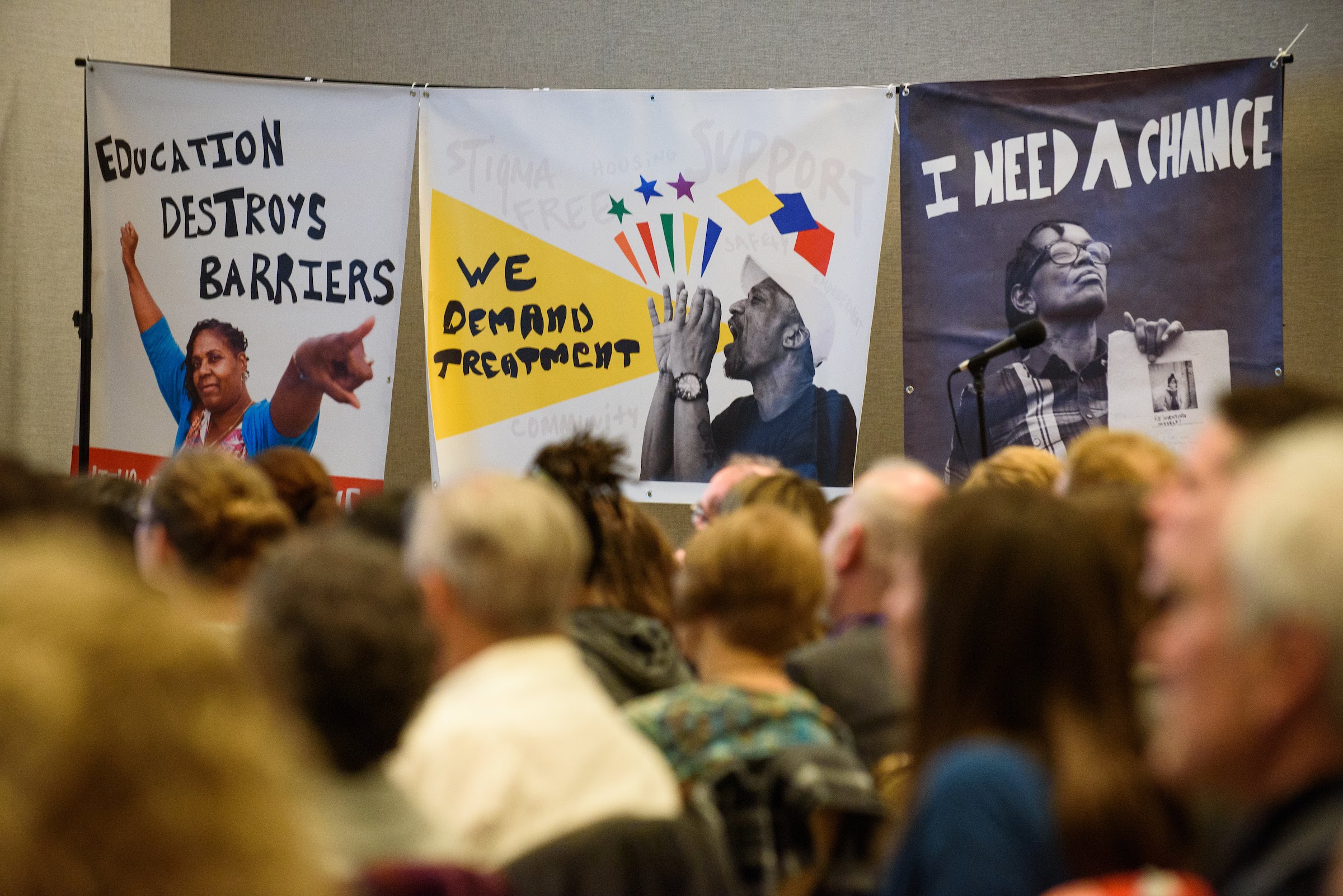
Artwork stating 'Education Destroys Barriers', 'We Demand Treatment', and 'I Need A Chance'

Search Results

You searched for: -

There are 17340 results  for your search.  View and Refine Your Search Terms

  • What the World Needs Now Is DDT

    DDT was banned in the United States in 1972 because of the harm it can cause to the natural environment when it is sprayed in mass quantities over large areas. However, spraying DDT on the walls inside of homes is the most effective way to prevent the spread of malaria in many African countries. Allowing African nations to use DDT for this purpose would save the lives of thousands of children who die each year from malaria.

    Read More

  • Solving San Francisco's crisis of homelessness requires a sweeping, costly plan for housing and treatment - and political unity that has been missing for two decades

    To combat rampant homelessness, cities like New York are investing in supportive housing and comprehensive, consistent services for the homeless population. Although San Francisco has smaller-scale supportive housing programs. political will and regular funding are necessary to grow those initiatives and make a large impact on homelessness in the city.

    Read More

  • The Taint of the Greased Palm

    Corruption in Mexico is ingrained in all systems and interactions. President Vicente Fox and his administration are trying to change this. Their mentality is that for corruption to truly be fought the government needs to actively make change and implement rules to counteract it, and some of Fox's changes are now beginning to see improvements.

    Read More

  • Compulsory Voting

    In the U.S. the electorate skews white, wealthy, and old because such demographics are more likely to vote. Creating mandatory voting laws would increase voter turnout and thus increase voting equity.

    Read More

  • Held together by the strings

    Funded by a combination of state grants and private donations, the nonprofit organization, Community MusicWorks, extends the reach and influence of classical music and music education. The nonprofit hosts workshops, lessons, and programs for children in low-income neighborhoods of Providence, RI, with interest in, but limited access to, music programs.

    Read More

  • Look at Brazil

    Soon, AIDS in Africa will be doing more than killing millions every year. It will destroy what there is of Africa's economy and cause further instability and, perhaps, war. But a nondescript hospital in Brazil could serve as a model for treating AIDS in Africa and worldwide.

    Read More

  • Urban kids dig into science and get friendly with worms

    New York City’s Apple Seed program gets children who live in the city to experiment, engage with, and learn from nature. The program – which has reached over 4,000 kids in New York Public Schools – teaches children about gardening, photosynthesis, and wildlife through hands-on learning experiences and has shown demonstrable success in higher math and science test scores. This program is part of a larger, nationwide trend toward engaged learning and nature.

    Read More

  • Coalition eager to apply lessons at home, Milwaukee anti-crime group inspired by its mission to Boston

    Now that a coalition of Milwaukee preachers, police and prosecutors has witnessed firsthand the success of a crime-fighting partnership in Boston, the local coalition is clearing its first obstacle -- putting its ideas into action at home.

    Read More

  • Holy alliance: Boston's cop-clergy partnership sees plunge in homicides

    Partnerships between police officers and clergy are being credited with dramatically reducing the rate of homicide in Boston, particularly among teens. And it is drawing the attention of officials in larger cities across the United States, all of whom are looking at adopting some portion of the Boston model.

    Read More

  • From Spare Change to Real Change: The Social Sector as Beta Site for Business Innovation

    The corporate sector has a unique skill set that can be leveraged to bring innovative ideas and practices to the social sector. Companies are going beyond traditional short-term corporate social responsibility models, from IBM bringing a computer program to Florida schools or Marriott’s long-lasting job training program. The business world has particularly influenced public education, work programs, and inner city development, all of which show the power and responsibility that big businesses have.

    Read More