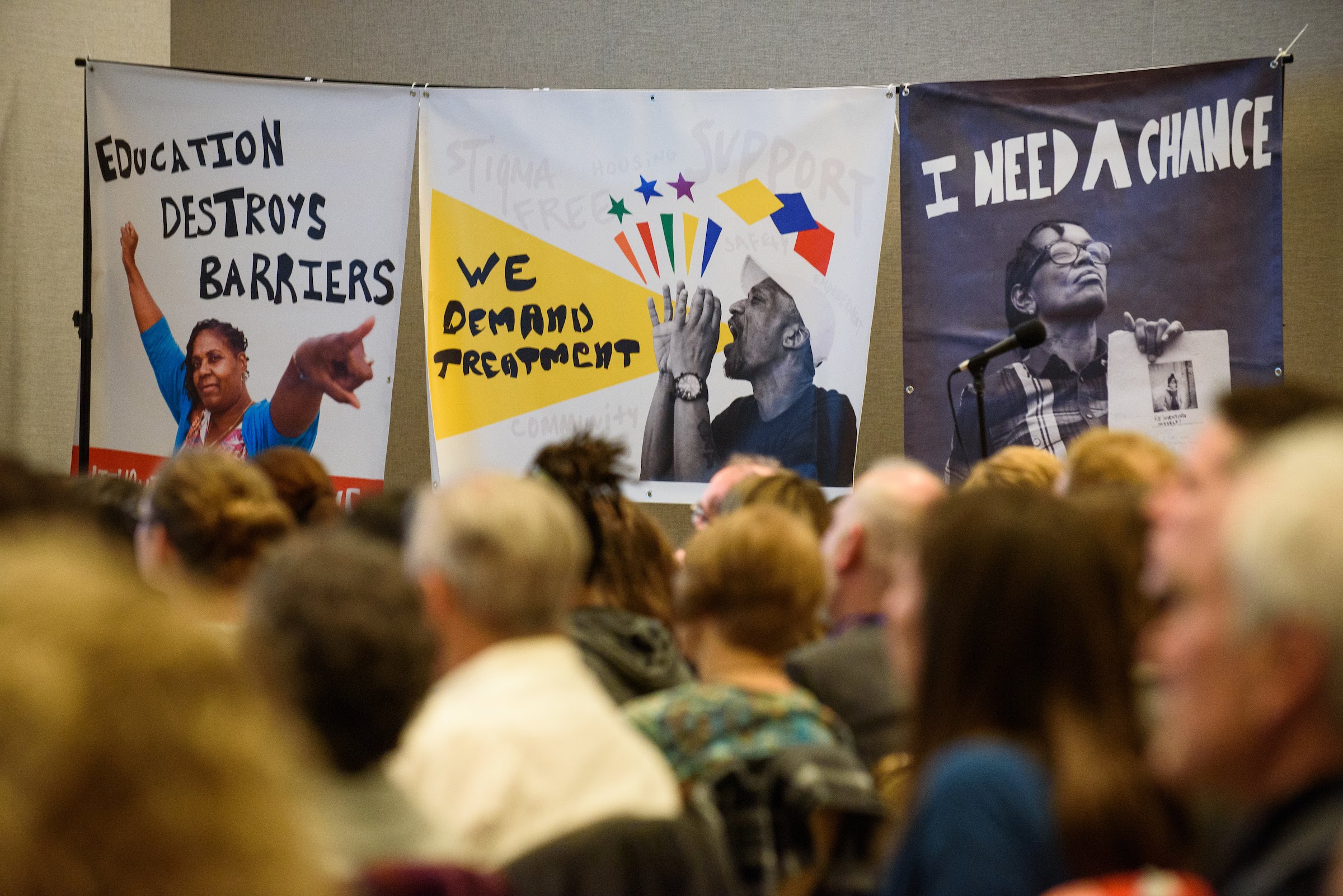
Artwork stating 'Education Destroys Barriers', 'We Demand Treatment', and 'I Need A Chance'

Search Results

You searched for: -

There are 17340 results  for your search.  View and Refine Your Search Terms

  • Grocery cooperatives help keep small towns alive

    Anita, Iowa faced many of the same challenges as other small towns when the last local grocer closed amid competition with large chains like Costco and Walmart. But when its residents realized the value of a local "mom-and-pop" food purveyor to the town's economy, they created the Anita Grocery Cooperative and a board to oversee it. The Coop marks a testament to collective action, resilience, and sustainable, locally-sourced solutions.

    Read More

  • One Spoonful at a Time

    The Maudsley approach to treating adolescent anorexia puts families at the center of the process, helping patients overcome their aversion to eating by calmly insisting that they nourish themselves back to physical and psychological health. This alternative to hospitalization has proven very effective in multiple studies, even though it contradicts traditional approaches, which keep parents at a distance based on the belief that they are part of the problem. The process is long and laborious, and relapses are common. But one mother's journey shows the hope that emerges when a deadly disease recedes.

    Read More

  • The City's Cost of a Life Redeemed

    Making the transition from the street to permanent housing can be difficult - it's hard to force people to seek help. San Francisco works to help the homeless rise from the poverty cycle by pinpointing the most chronically homeless people on the street and urge them into services.

    Read More

  • Special Report: Abandoning our mentally ill

    With the promise of community care, psychiatric wards were unlocked 30 years ago. Today, the sickest patients live in squalor.

    Read More

  • Fixing Hospitals

    Medical errors kill 100,000 Americans every year. A new vanguard is out to fix the fatal flaws, mostly by evaluating processes and looking for points of breakdown or confusion.

    Read More

  • Reaching into a void: For mayor's team of street crusaders, getting the chronically homeless into housing requires patience as they battle their addictions -- and persistence if they relapse

    San Francisco's Care Not Cash program began in 2004 in response to the city's homelessness crisis. One facet of the program is an outreach team, whose members regularly visit homeless people on the street to connect them to resources such as housing and drug rehabilitation.

    Read More

  • The Baby Brain Connection / Armed with new research on developing brain structure, social workers can help fix troubled baby/parent relationships

    Research has shown the importance of infant-primary caregiver attachment for the future of the child's cognitive ability, emotional health, and parent relationship. Infant Mental Health Specialists and other practitioners have emphasized programs and techniques to improve this relationship, for example infant massage classes, and specifically tailored interventions.

    Read More

  • Success in the Big Apple: New York City finds path for mentally ill / Housing homeless before treatment bucks conventional wisdom

    In San Francisco, 23 percent of homeless people return to the street after transitional housing programs. A New York program gives the mentally ill and homeless individual apartments alongside average New Yorkers and has had an 84 percent retention rate.

    Read More

  • Success in the City of Brotherly Love / The city that knows how - Philly Philadelphia / Effort stems tide of homelessness -- can S.F. learn from it?

    Philadelphia reduced chronic homelessness by coordinating outreach through a centralized office and providing immediate access to housing and services such as counseling and drug rehabilitation. San Francisco is studying the model.

    Read More

  • Shame of the city: Signs of hope in helping S.F. homeless turn lives around / On-site medical, psychiatric aid makes housing program work at reasonable cost

    In the U.S. most supportive housing programs have a 75 percent turnover rate, meaning people end up in the streets again. Direct Access to Housing in California manages a turnover rate of only 15 percent by providing a home, counseling, and financial management.

    Read More