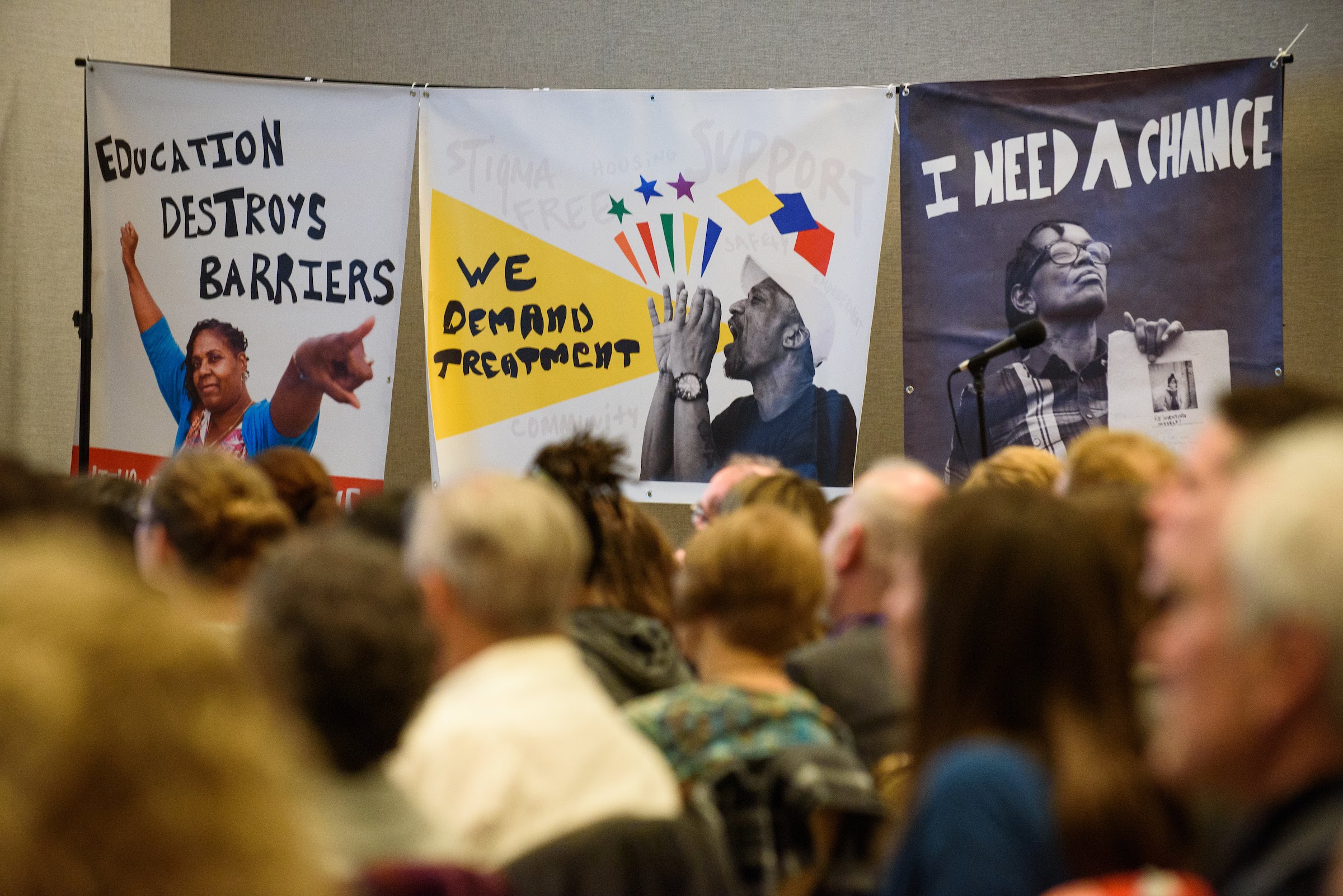
Artwork stating 'Education Destroys Barriers', 'We Demand Treatment', and 'I Need A Chance'

Search Results

You searched for: -

There are 17340 results  for your search.  View and Refine Your Search Terms

  • Filling the Gap Between Farm and Fair Trade

    The non-profit Root Capital created a lending initiative in Mexico which helps mid-size rural farmers gain access to capital, skills, and consumer markets from which they would otherwise be excluded.

    Read More

  • Health Care and the Art of Motorcycle Maintenance

    In a mountainous region of Lesotho, a man named Tsepo Kotelo visits 20 villages every week on his new motorcycle to provide health care to local villagers. The Elton John AIDS Foundation gifted the motorcycles to Kotelo and his colleagues, allowing them to increase the number of patients they visit by 600 percent. An organization called Riders for Health helps maintain the bikes, ensuring that remote villages will continue to receive medical care.

    Read More

  • A Healthier, More Efficient Way to Cook

    Clean cookstoves reduce emissions, use less fuel and cook faster than open fire hearths, offering people in developing countries an affordable way to create a healthier indoor environment. Although "plenty of work remains in raising awareness about indoor air pollution," one nonprofit has already sold over 150,000 cookstoves in India.

    Read More

  • Can Democracy Work in Chicago?

    A Chicago Alderman experimented with participatory budgeting, where residents decide how some of their tax money will be spent, by allowing 49th Ward residents to determine how to spend $1.3 million in the district. Residents selected 14 projects, including commissioning murals, creating a dog park and community gardens, purchasing solar-powered garbage compactors, and repaving streets. All projects are moving forward. Over 200 mural proposals were received, which the Alderman’s office narrowed down to 24 choices for community members to vote on. 12 will be funded by the city with stipends for the artists.

    Read More

  • Can Ice Cream Help Pull Rwanda Out of Poverty?

    The opening of an ice cream shop in Butare, Rwanda is a small part of a larger effort to bring joy and personal health and happiness to communities who otherwise "ceased to believe they deserved it." A nonprofit based in Brooklyn -- and founded by owners of the popular ice cream shop Blue Marble -- pays for English classes and business training for the women running the shop as an effort to help the managers stay in the business of giving their neighbors joy.

    Read More

  • The Burden of Thirst

    Foro, a village in southwestern Ethiopia, has suffered from drought conditions for years, leaving the little water the communities can access polluted with waste. While various water projects have been attempted only to be abandoned, groups are working to restore some of these projects by combining technologies with community involvement.

    Read More

  • Dreaming the Possible Dream

    Recession economies engender a sense of malaise and stagnancy, but two innovative men are working to find affordable, scalable solutions to current issues. Instead of worrying about CO2 emissions, Vinod Khosla imagined how to turn them into calcium carbonate to be used as concrete aggregates for building walls and highways. Another, K.R. Sridhar, is marketing clean fuel cells to huge American companies.

    Read More

  • 100 Percent Renewable? One Danish Island Experiments with Clean Power

    One small island in Denmark is technically 100 percent powered by sustainable sources of energy, giving the island total energy independence.

    Read More

  • The Revolution Will Be Mapped

    Mapping technology has been used in creative ways to visualize discrimination on the municipal level and hold governments accountable for using methods that are hard to understand or quantify to perpetuate discrepancies. Cedar Grove Institute for Sustainable Communities in North Carolina is one of the first to do this kind of work, and their methods and expertise have spread across the nation.

    Read More

  • If Health Care Is Going to Change, Dr. Brent James's Ideas Will Change It

    Dr. Brent James, chief quality officer at Intermountain Healthcare, came up with a system for regulating and improving healthcare in the Intermountain medical region and at other hospitals nationwide. He teaches a program called the Advanced Training Program that draws physicians and hospital administrators from all over the country. His method is simple; his team develops best care standards for an array of common medical ailments by regulating the care that is suggested to doctors, monitoring patient outcomes based on these practices, and refining the literature to be even more accurate.

    Read More