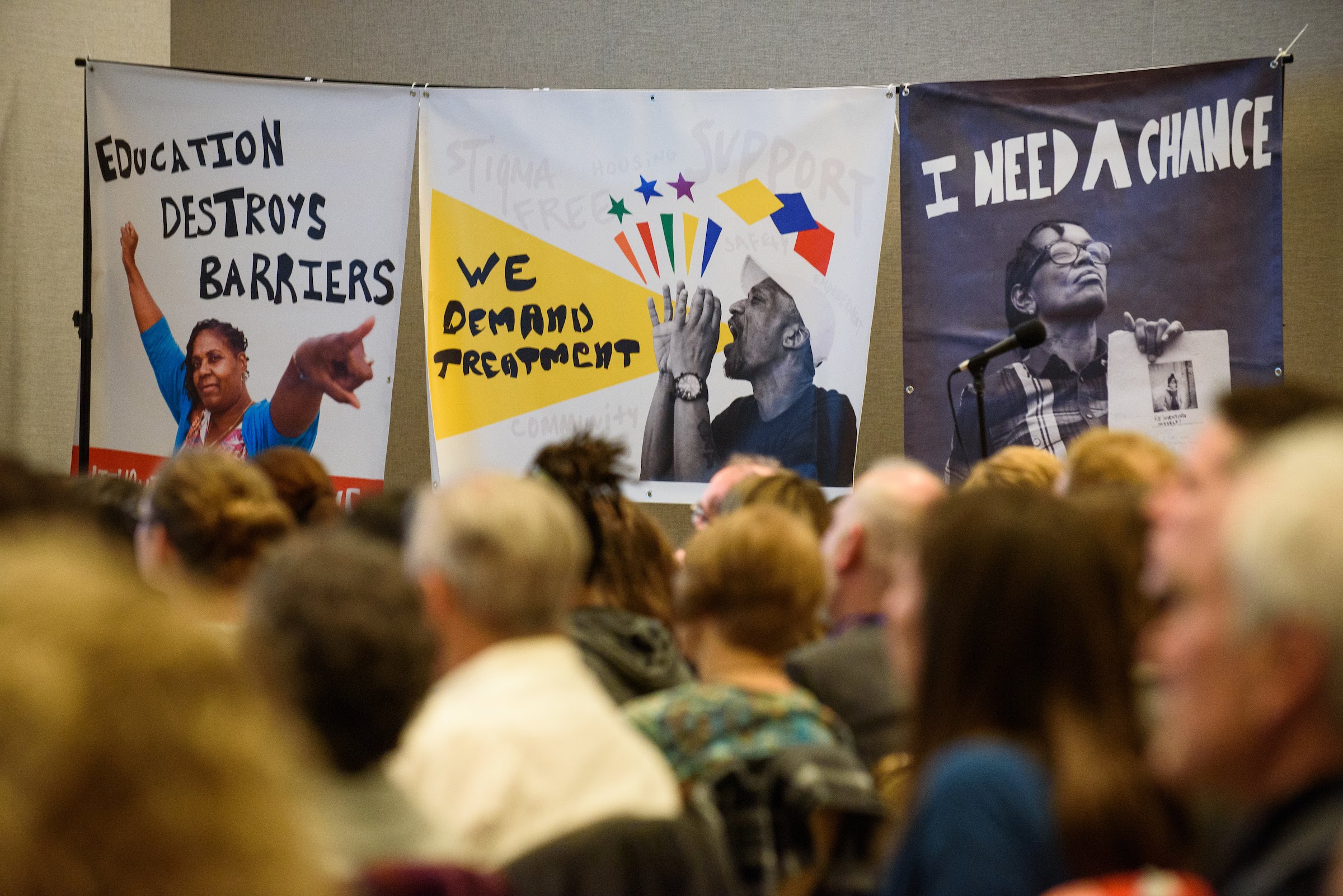
Artwork stating 'Education Destroys Barriers', 'We Demand Treatment', and 'I Need A Chance'

Search Results

You searched for: -

There are 17340 results  for your search.  View and Refine Your Search Terms

  • Why ‘Solutions Journalism' Matters, Too

    Crises and problems are well-covered in the media. When the media focuses instead on organizations that are doing social good, it has a better effect because then these organizations are more likely to receive support and expand their access.

    Read More

  • Karyn McCluskey: the woman who took on Glasgow's gangs

    In Glasgow, gang violence was rampant and affected the youth of the community. Then a new initiative was started: VRU's Community Initiative to Reduce Violence (CIRV). This initiative focused on providing support to those who need help and to reduce police tolerance towards violence. This program helped to build empathy and reduced violence by 24%.

    Read More

  • To Maintain Water Pumps, It Takes More Than a Village

    Water pumps often break and no one locally has the skill or parts to fix them. Two columns on Water Aid’s program in India to train women to be handpump mechanics.

    Read More

  • Everyone Speaks Text Message

    “For many tiny, endangered languages, digital technology has become a lifeline.” Phones, the web, software systems, these are all technologies being employed to keep heritage languages alive.

    Read More

  • Keeping the Water Flowing in Rural Villages

    In Tanzania, mapping of water points showed that nationally, less than half the existing rural water points were working—of water points that were less than two years old, a quarter had already stopped functioning. British charity WaterAid sets up workshops in poor countries like Tanzania and India to train mechanics in order to have a local fix for these problems. The mechanic position offers employment opportunities for women, fixes pumps for an average of 100 rupees (roughly $2.00), and repaired more than 1,100 pumps in the first 14 months.

    Read More

  • Outsourcing Is Not (Always) Evil

    The United States can outsource certain kinds of "microwork," such as accurately digitizing large swaths of information, to developing countries without taking jobs from Americans ― if it’s done carefully, and ethically, as some organizations are working to do. As the author Robert Wright has argued, we no longer live in a zero-sum world, where one person’s, or one country’s gain, must be another’s loss.

    Read More

  • Safety Nets for Freelancers

    Many independent workers feel that the battle for affordable health insurance is one they are losing. The Freelancers Union is working to provide protections for “contingent” workers that go beyond just health care.

    Read More

  • First, Let's Fire All the Managers

    Morning Star, a global tomato processor based near Sacramento, California, establishes a unique organizational structure by eliminating manager hierarchies, titles, or promotions. The model gives individual employees managerial responsibilities for themselves and relies on peer review for compensation changes, performance evaluations, and work-flow decisions. In turn, the company saves on managerial overhead and instills respect and responsibility on all employees.

    Read More

  • Health Care for a Changing Work Force

    America’s system of health care is based on an old industrial-era model, without taking into account a decentralized, mobile, independent workforce that remains largely unprotected without health and unemployment insurance. The Freelancers Insurance Company, based in New York State, offers competitive premiums by having their executives receive salaries at low wages. The model keeps costs under control, which in turn makes health care more accessible to independent workers.

    Read More

  • Working in the Himalayas to Prevent Disastrous Flooding

    Countries impacted by climate change are working to mitigate the effects, but more help is needed. Every year Bhutanese citizens dig a channel to lower the water level of Thorthormi, a huge glacial lake that posing a risk of flooding downstream. But Thorthormi is just one rapidly expanding lake among many. Another 82 are deemed growing risks in Bhutan alone.

    Read More