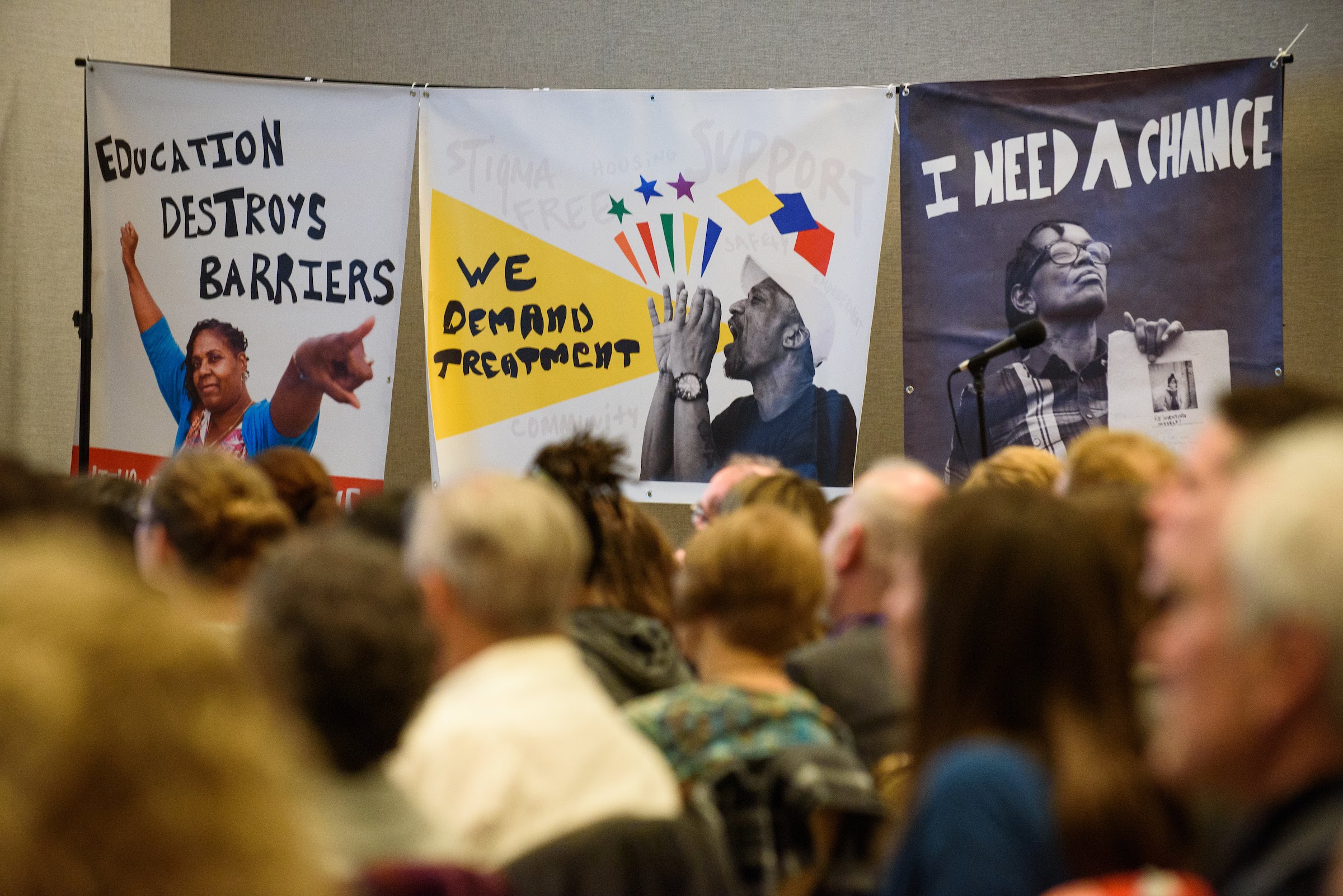
Artwork stating 'Education Destroys Barriers', 'We Demand Treatment', and 'I Need A Chance'

Search Results

You searched for: -

There are 17340 results  for your search.  View and Refine Your Search Terms

  • Nepal sees end in sight for trachoma

    In Nepal, specialty eye hospitals are training staff to travel to remote areas of the country to provide eye care to rural communities. This initiative is aimed to prevent and treat trachoma, a degenerative eye disease, with the goal of ultimately eradicating blindness caused by trachoma.

    Read More

  • Microhydro Drives Change in Rural Nepal

    Microhydro power plants are finding their place amongst some of the smallest villages in Nepal, bringing both electricity and industry opportunities to the regions. Although they aren't capable of generating near the amount of power as a typical hydro plant, they also have far less impact on the environment and encourage community involvement.

    Read More

  • The Promise of Social Impact Bonds

    When a government needs to invest in an expensive capital project — a new sewer system, bridge or highway — it issues bonds. The hot new idea in social programs – finance prevention programs to cut recidivism, reduce homelessness or keep kids in school by selling bonds, to be paid only if the program is a success.

    Read More

  • A Better Way to Talk About Faith

    Interfaith Youth Core (IFYC) brings together college students from different faiths so that they develop respect and appreciation for each other and different traditions. IFYC also cultivates interfaith leaders and organizes campus-based campaigns called Better Together. Some students have received push back from their faith communities, but students and faculty have reported the campaigns for interfaith engagement leads to positive outcomes of increasing tolerance on campuses. The organization has trained students who have run campaigns on 106 campuses.

    Read More

  • Sprouting success in Senegal: trees offer growing solution to Sahel

    Allowing trees and crops to coexist boosts the resiliency of agricultural land. In Senegal, farmers engaged in Farmer-Managed Natural Regeneration (FMNR) prune coppiced trees to help the stumps regrow. The practice is more practical and effective than planting new trees. The coppiced trees retain much of the existing biomass under the soil. And as the trees regrow, they help prevent erosion, retain moisture, and can even increase nitrogen levels in soil.

    Read More

  • The Microinsurance Revolution

    If rich people need life insurance, poor people need it more. Here’s how millions of poor people are getting it – including people with AIDS.

    Read More

  • The Dawn of the Evidence-Based Budget

    When we consider the vast sums that governments spend — and the responsibility public officials bear — it seems crazy that policy makers don’t routinely make good use of evidence. The new White House effort to base spending decisions on hard evidence is a step toward delivering more social good per taxpayer dollar.

    Read More

  • Green Roofs in Big Cities Bring Relief From Above

    New York City black tar roofs cause a number of environmental problems, including air pollution, heat absorption that raises energy consumption, and storm water runoff in the sewer system. Efforts to turn these old roofs into green spaces cool the buildings, enable the containment of more rainfall, reduce sewer discharge, generate energy, and absorb carbon emissions. New York City has a pilot program offering financial help for green roofs.

    Read More

  • Texas puts more people in treatment and fewer people in prison

    Due to the cost of building new prisons and the cost per inmate, Texas has implemented a new model that encourages judges to send parolees to treatment programs rather than back to prison when they misstep. Texas is sending fewer people to prison, recidivism rates are down and the state is saving money.

    Read More

  • Making Schools Work

    Despite the latest anniversary and celebration of Brown v. Board of Education, desegregation is effectively dead. Using magnet schools and other programs to integrate geographic regions may be the right next move.

    Read More