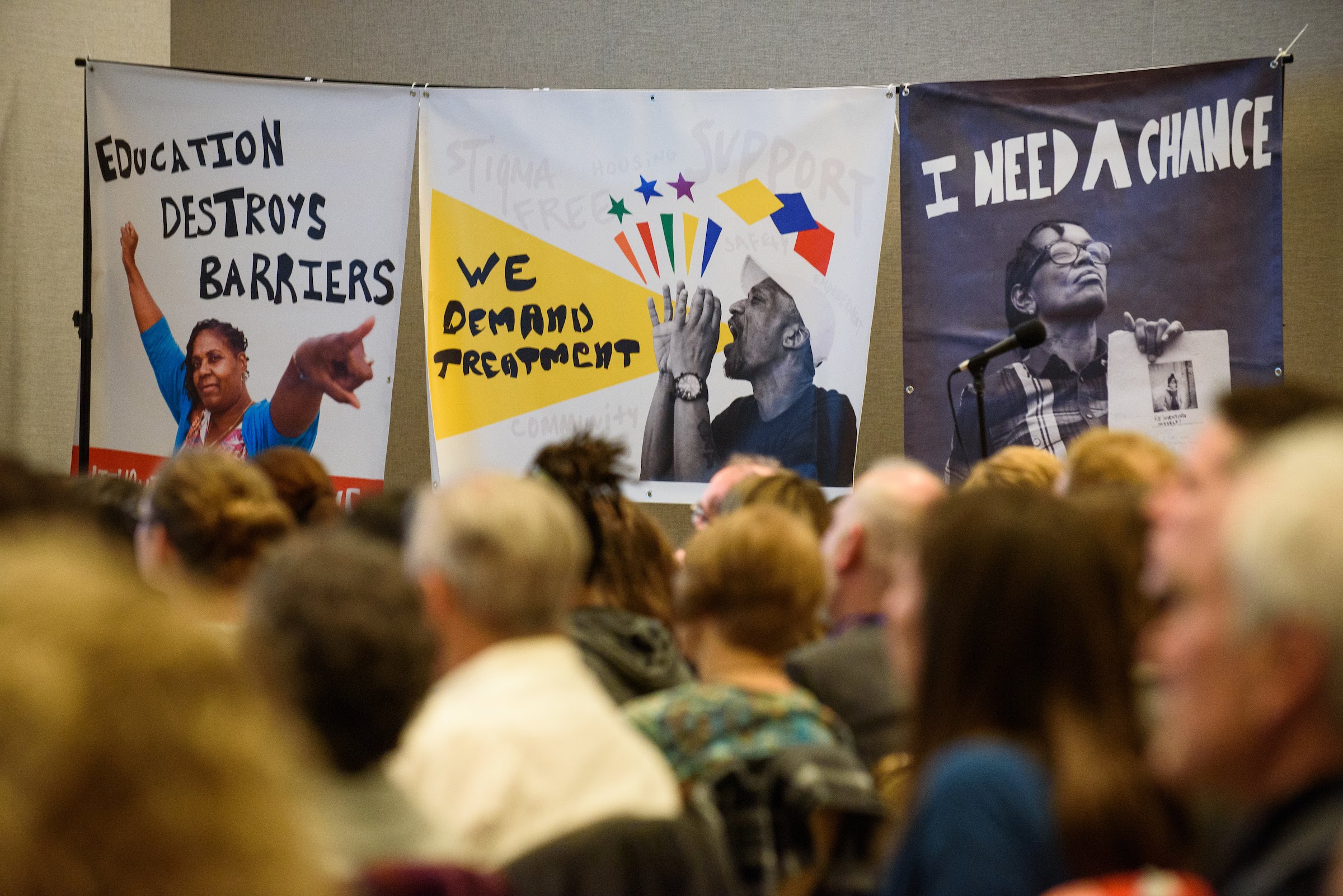
Artwork stating 'Education Destroys Barriers', 'We Demand Treatment', and 'I Need A Chance'

Search Results

You searched for: -

There are 17340 results  for your search.  View and Refine Your Search Terms

  • Falling Through the Cracks

    People with HIV/AIDS don't always know where to go for help or don't feel empowered to return when psychiatrists or doctors seem unwelcoming. Organizations throughout Washington, D.C. are working against perception by providing comprehensive approaches to health care services.

    Read More

  • How can schools nationwide mimic London's improvement?

    For many years, students in London's secondary schools consistently scored worse on exams than their peers in other parts of the country, but now, other regions are looking to London as a model. Under the "London Challenge," local students receive extra help if they are falling behind in reading and writing and teachers work closely with parents to "build confidence and support aspiration." Although funding for the original program has since been cut, the London schools, whose classrooms are filled with low-income and English as a second language students, have continued to see improvements.

    Read More

  • The Benefits of Positive Parenting

    Improving the way people parent might seem an impossible challenge, given the competing views about what constitutes good parenting - can we influence a behavior that is rooted in upbringing and culture, affected by stress, and occurs mainly in private? Triple P – Positive Parenting Program works to educate parents on how to improve their parenting skills.

    Read More

  • Using The Crowd To Save People After Disasters

    CrowdFlower, a site which pays people to do microtasks, has found that it can be an extremely fast and effective medium between aid workers and locals during disasters.

    Read More

  • DNA Analysis, More Accessible Than Ever, Opens New Doors

    A few years ago, a genetic sequencing test was so difficult and expensive that it was generally only available to participants in research projects like those sponsored by the National Institutes of Health. But the price has plunged in just a few years from tens of thousands of dollars to around $7,000 to $9,000 for a family.

    Read More

  • India's rice revolution

    The System of Root Intensification (SRI) method resulted in dramatically high yields from one Indian village. The system centers on a "less is more" approach and results in higher yields—without the use of GMOs. The idea has faced barriers in spreading, as scientists are wary of it, even as villagers embrace the empirically successful approach.

    Read More

  • Avoiding the Curse of the Oil-Rich Nations

    Alaska has created a way for residents to financially benefit from the state's dependence on oil revenues. By giving residents a yearly portion of the revenue, the state has been able to see positive effects from an often conflict-ridden industry.

    Read More

  • Malawi's Leader Makes Safe Childbirth Her Mission

    The vast majority of births in Malawi still happen under the care of traditional birth attendants, who are often unequipped to deal with potentially lethal complications. But new president Joyce Banda is helping Malawi’s women to abandon dangerous childbirth customs by working with the custodians of local practices: village chiefs.

    Read More

  • New York City's Teen Pregnancy Rate Plummeted After High Schools Expanded Access To Plan B

    From 2001 to 2011, New York City's teen pregnancy rate decreased by 27 percent as a result of increased access to contraceptives. Public schools started providing Plan B and condoms to students.

    Read More

  • ‘Waste' Fuels Scientists' Efforts

    In order to hunt for the oldest fossils in Africa, scientists needed to produce alternative forms of energy to allow them to live in these desert regions. One such project is the gasifier, which turns discarded doum palm nuts into energy.

    Read More