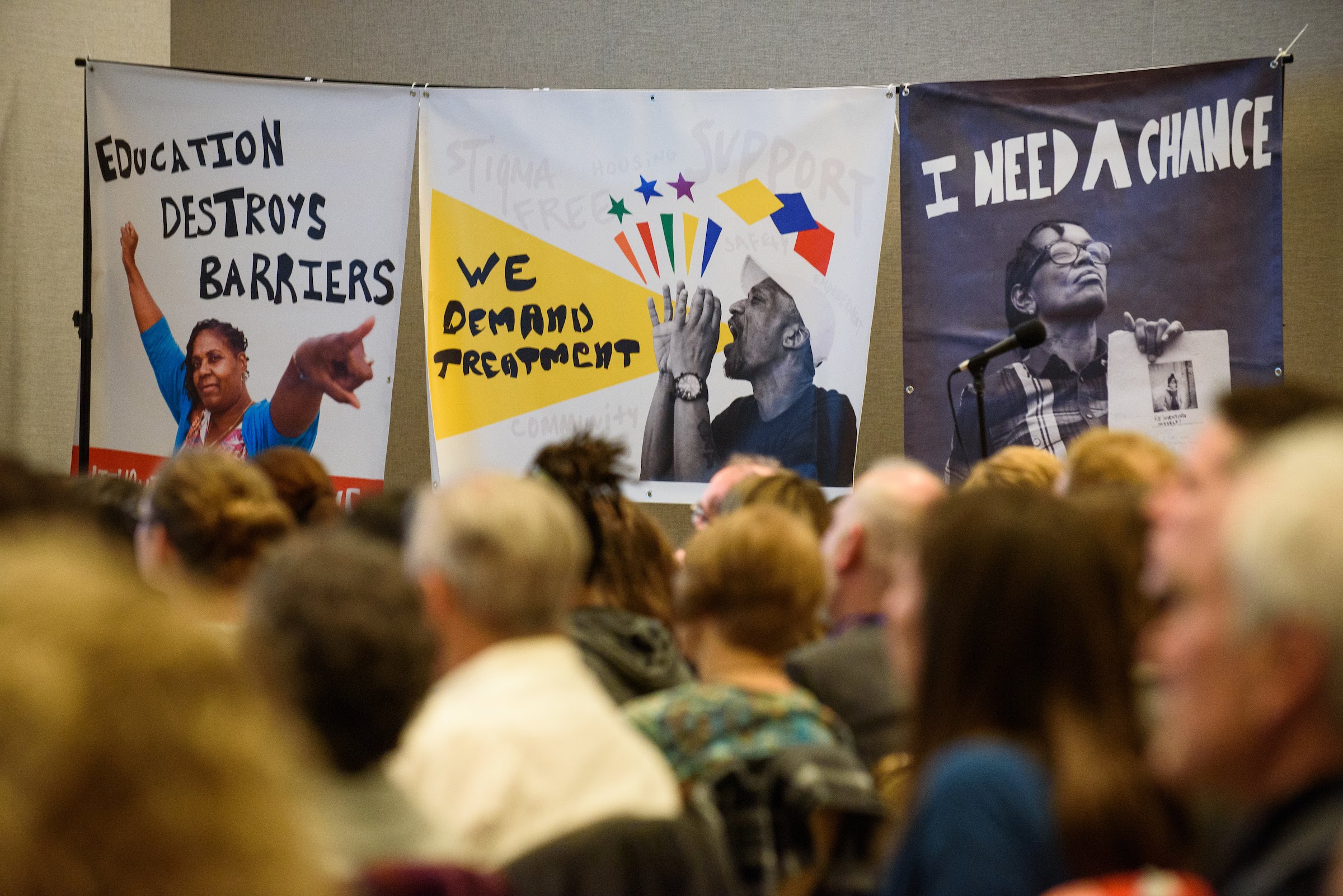
Artwork stating 'Education Destroys Barriers', 'We Demand Treatment', and 'I Need A Chance'

Search Results

You searched for: -

There are 3842 results  for your search.  View and Refine Your Search Terms

  • In Haiti, A Building That Heals

    A collaboration between architectural designers and medical providers created a cholera treatment clinic in Port-au-Prince where the design of the building itself supports treatment. The building is well ventilated and filled with natural light, provides an open space for providers to see many patients and be able to respond in case of crisis, and has the ability to collect and treat water.

    Read More

  • Acupuncture for pain: Ancient medicine may hold the key to solving the opioid epidemic

    With the growing opioid crisis, patients and doctors are looking for alternative ways to treat pain. Acupuncture is becoming more popular for its relief of migraines and pain.

    Read More

  • The Town Where Public Toilets Are Everywhere

    In cities all around the world, locals as well as tourists struggle to find adequate public restrooms. In Bremen, Germany, a creative partnership is solving the public restroom problem. “The Nice Toilet” initiative allows the local government to pay small businesses a stipend in exchange for putting a sign in their window notifying visitors of their public toilets. The government saves money, businesses make money, and visitors are happier.

    Read More

  • When federal health care falls short, tribes improvise

    Indian Health Service, the Native American Health federal agency, has not always been an ideal health program due to lack of funding and lack of flexibility to each tribe. More tribes are opening their own clinics in order to tailor health care to their needs and create more jobs, or taking over the behavioural health programs only.

    Read More

  • Smoke and Mirrors: Inside Malawi's untold health crisis

    'Unclean' cooking - rudimentary, open-fire cooking practiced by millions of people around the world - is one of the leading causes of respiratory disease and death, especially for women, in developing countries; it is also a serious contributor to deforestation, air pollution, and continued poverty (due to the cost of fuel). But a solution has been gaining momentum in Malawi with help from the UN, in the form of clean, more efficient cookstoves that not only emit less smoke, but use less fuel and reduce the risk of burns to family members.

    Read More

  • Pakistan's polio health workers make inroads toward eradication

    For disease eradication campaigns to succeed, public health officials need to interact with the public. In Pakistan, the front line against polio is comprised of women who reach out to directly to families with young children, often at major transportation centers. The women engage in this type of public health awareness as a way to navigate around extremist violence and the adverse consequences of a US fake vaccination campaign. The women focus on building rapport with families, and then administering vaccines.

    Read More

  • The Afghan Madam Helping Sex Workers Take Charge of Their Sexual Health

    In Afghanistan, Bridge Hope Health Organization has sexual health peer educators in order to help prevent HIV. This NGO has been developed to help educate and prevent HIV in sex workers or other high risk individuals.

    Read More

  • How AI Is Slowing the Spread of STIs

    Disseminating correct HIV information to the public can be difficult but an HIV prevention program for the homeless has used artificial intelligence to select 'influencers' who are more likely to spread information. These individuals help to extend information through their social networks, resulting in more and accurate information reaching the public.

    Read More

  • Long-term drug treatment facilities at former Edwin Shaw site aim to fill gaps, prevent relapses

    Two organizations, called Hope United and Restore Addiction Recovery are obtaining land on an old hospital grounds to build long-term treatment facilities for opiate addicts. The idea is that, currently, the longest in-patient treatment programs are only 90 days and addicts need more time than this to recover from their addiction and really get on their feet. These new facilities will be year-long treatment programs and will include support services that continue after discharge, as well.

    Read More

  • What Happened After California Revolutionized Sex Ed

    California does well when it comes to healthy teen sex behaviours, but the Healthy Youth Act has pushed this even further. This act provides a more comprehensive education including LGBTQ relationships, medical accuracy etc.

    Read More