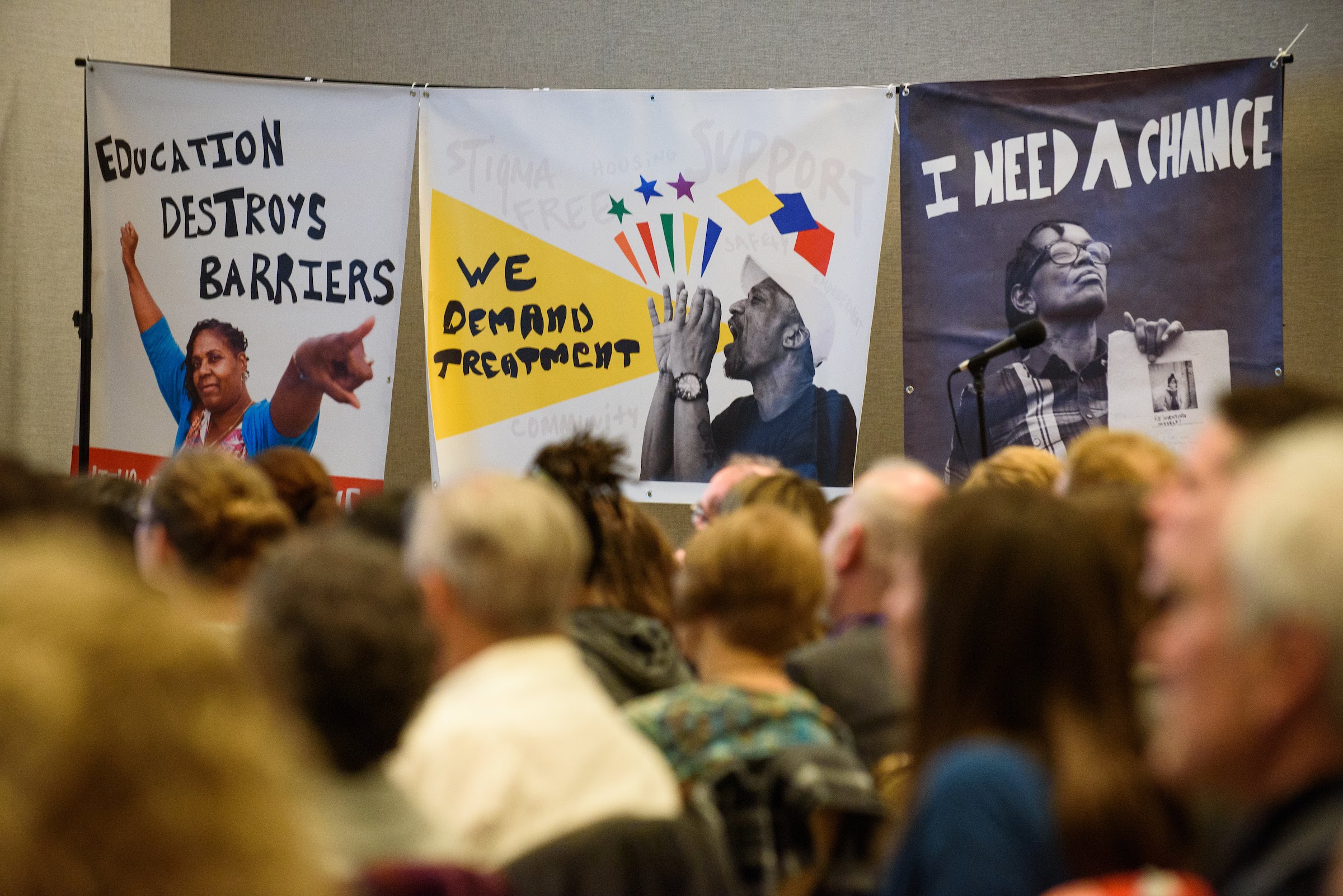
Artwork stating 'Education Destroys Barriers', 'We Demand Treatment', and 'I Need A Chance'

Search Results

You searched for: -

There are 3842 results  for your search.  View and Refine Your Search Terms

  • Companies Respond to an Urgent Health Care Need: Transportation

    Lack of transportation is a key reason why people don’t go to doctor appointments. RoundTrip and Circulation are two start-ups filling the gap, making it easier for particularly older patents to access customized rides.

    Read More

  • One million Michiganders have little or no dental care access. Here's how we can change that.

    The Michigan State Oral Health Plan began offering services after budget constrains eliminated the Medicaid oral health program in the state.A diverse group of stakeholders work to make the care accessible for residents including initiatives to make sure children have access to care. The success of these programs is also highlighting the need for further improvements and empowering groups to emulate the success of pilot programs in Lansing and Grand Rapids.

    Read More

  • Sending Letters About Their Patients' Overdoses Changes Doctors' Prescribing Habits

    San Diego area physicians are now receiving a letter if one of their patients dies of an opioid overdose. The goal of this new project is to remind doctors of the impact of their actions and lower opioid prescribing rates.

    Read More

  • Black Fire Brigade gives $30K to train 30 South, West Side young adults as EMTs Audio icon

    Black firefighters in Chicago launched the nation's first organization aimed at mentoring young men and women of color and helping them prepare for the firefighters exam. It's a way to combat inner city violence and address a long history of discriminatory hiring. The Black Fire Brigade raised more than $30,000 to help 30 young people with the costs of a course in emergency medical technician training and will also provide them with job placement after they gain their certification.

    Read More

  • New digital software reduces absenteeism in health centres

    An electronic human resources system has reduced health worker absenteeism in Uganda, improving health service delivery across the country. The tool requires workers to sign in and out, pushing them to show up for their shifts and allowing supervisors to more easily reward good performance and adjust staffing levels.

    Read More

  • Planting Trees to Help Dallas Breathe

    In 2016, the Texas Trees Foundation and federal Trust for Public Land partnered to use GIS technology in greening Dallas, Texas, and plant some 1,000 trees to start. Not only does the initiative reduce respiratory problems like asthma--over the next 40 years, the new tree cover is expected to create about $2.9 million in environmental benefits, sucking around 250 tons of CO2 from the air and capturing around 4 million gallons of stormwater.

    Read More

  • Lessons for Bida: Three approaches that may solve Niger state's public sanitation dilemma

    In order to improve community health and maintain defenses against communicable diseases in Nigeria, thousands of sanitation workers have been recruited, trained, and deployed. Additionally, neighboring countries have increased inspections of homes, vendors, and markets as well as created communal cleaning days.

    Read More

  • How an army of volunteers helped Paraguay to conquer malaria

    Through a long-fought, concerted effort, requiring collaboration from government agencies, information distributers, and more, Paraguay has become the first country in South America to eradicate malaria. Most importantly, however, is the network of volunteers spreading information and awareness, and the sustained funding for anti-Malaria efforts through the social security program.

    Read More

  • Nairobi set to establish breast milk bank at Pumwani

    A hospital in Nairobi, Kenya is setting up the country's first breast milk bank with help from the government and an NGO to ensure infants get breast milk even if their mothers cannot provide it. The World Health Organization recommends breastfeeding children for at least the first six months of life and officials estimate the breast milk bank will reduce neonatal deaths by 10 percent. However the effort could still face skepticism by the public over the safety of donated milk.

    Read More

  • Nepalese restaurant heeds call to hire hearing-impaired staff

    Despite quotas intended to encourage the hiring of employees with physical disabilities, many disabled people still face hiring challenges. However, a restaurant chain in Nepal called Bakery Cafe seeks to change that. About one-third of its employees have hearing impairments. Far from charity, the company trains workers and has promoted many, too, all based on merit. Its owner hopes it inspires other businesses and leaders to do the same.

    Read More