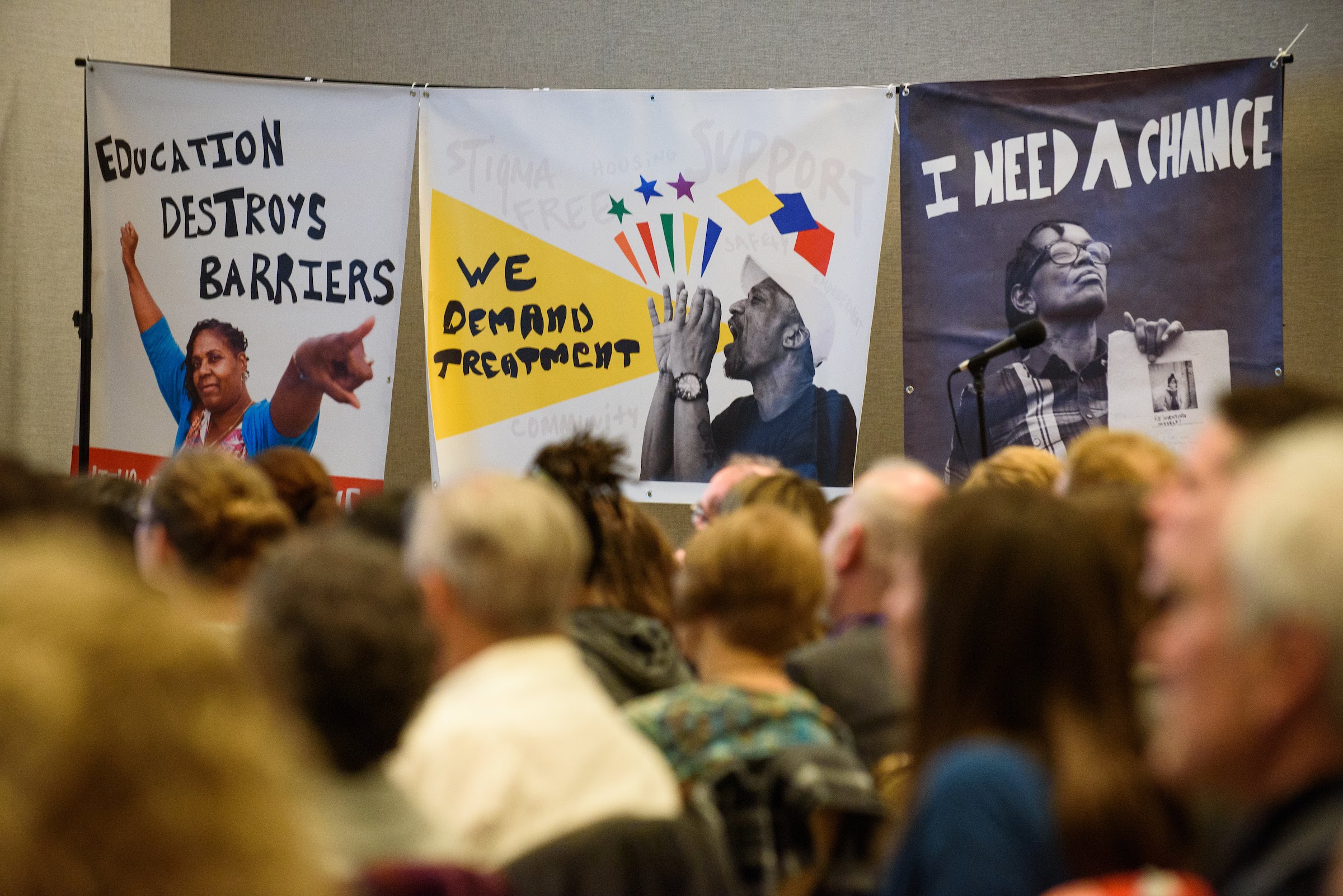
Artwork stating 'Education Destroys Barriers', 'We Demand Treatment', and 'I Need A Chance'

Search Results

You searched for: -

There are 3842 results  for your search.  View and Refine Your Search Terms

  • Nigeria, Kenya and Senegal - Three African Countries Providing Solutions in Fight Against Genital Cutting of Girls

    This cross-border story, which takes place in Nigeria, Kenya, and Senegal, examines 3 different approaches to address the still-widespread practice of Female Genital Mutilation (FGM). In Nigeria, a short film about FGM has prompted the passing of a new law and gathered a new wave of survivors speaking up. In Kenya, a group called Dayaa Women's Group actively involves the traditionalists (cutters) and religious/community institutions in the fight against FGM along with widespread trainings. In Sengal, women lead the fight with a radio program for girls and providing financial incentives to prior cutters.

    Read More

  • Battling concussions: Where's the trainer?

    In Oregon, school are required by law to remove a child from play if they have been concussed, but not all schools have athletic trainers to assess the situation. Although it's still up to each individual school district to make the decision about hiring athletic trainers, the schools that have chosen to do so, have found success through creating partnerships.

    Read More

  • Nigeria, Kenya and Senegal: Three African countries providing solutions in fight against FGM

    To combat the persistence of Female Genital Mutilation (FGM) in Africa, communities band together to spread awareness through film, religious outlets, community gatherings, and other creative means of education. While FGM is still prevalent in areas that believe it to be an important traditional practice, individuals and groups across Nigeria, Kenya, and Senegal have reduced the practice of FGM in their areas.

    Read More

  • The Instant, Custom, Connected Future of Medical Devices

    The future of medical devices is beginning to heavily rely on the integration of technological advances including apps, robotic and 3-D printing. From increasing education around diabetes via an app to digital smart pills that treat mental illnesses, technology has become a crucial partner to not just those working in the health industry, but also to the consumers.

    Read More

  • When public restrooms fail, rent them out as churches?

    On World Toilet Day in 2014, the Kenyan government promised to build 180 public toilets in an ambitious move to combat the issue of public sanitation. The program went well once the keys were handed off to the National Youth Service of Kenya as a means of income, but issues quickly arose that could not be resolved because of a lack of further funds. The youth has since transformed their toilets into a rental space for local churches, such as Christ Miracle Church for All Nations in Laini Saba.

    Read More

  • New nonprofit offers medical interpretation

    Interpreters provide non-English speakers greater access to healthcare by lowering the language barrier. The Spanish-speaking translation service, La Voz, helps residents in Wyoming who cannot afford expensive on-demand translation services. Interpreters also act as advocates, helping patients communicate with doctors, coordinate their care, and come to a better understand of their treatment.

    Read More

  • Another Kind of Rescue After the Wildfires

    Wildfires have routines destroyed parts of California and are only becoming more devastating as temperatures rise, taking many lives in their paths of destruction. To bring solace and closure for families, volunteer archaeologists are training dogs to identify cremated remains.

    Read More

  • Community Cooperative battles hunger and pollution one plant at a time

    A soup kitchen in Lee County, Florida, is feeding the community and also educating people about sustainability. Access to urban farming and the resulting fresh produce allows the initiative to teach adults and students about growing food, nutrition and making better lifestyle choices. The urban garden also contributes to reducing air pollution.

    Read More

  • To tackle addiction, the French look beyond drugs to care for the person

    Designated harm reduction centers can reduce overdoses and infections among those suffering from addiction. Facilities that operate as safe spaces can also offer resources such as treatment or housing, such as at the Planterose DropIn Center in Bordeaux and the SOS SleepIn Center in Paris. The strategy of helping addicts first use safely, and then rebuild social connections, has helped France to reduce its rate of HIV infection.

    Read More

  • Campus vending machines offer emergency contraception without the stigma

    College campuses across the United States are installing emergency contraception vending machines in order to expand access and decrease stigma around medications such as Plan B. Although not all universities support this solution, many that have implemented the vending machines report that they are "the machines have been extremely well-received and heavily utilized by students."

    Read More